Water Damage Restoration in Atlanta: What Homeowners Need to Know

Water Damage Is Atlanta's Most Common Home Emergency
Whether it is a burst pipe in a Stockbridge townhome, a water heater failure in a Buford split-level, or storm flooding in a Sharpsburg basement, water damage is the most frequently filed homeowner's insurance claim in the United States. Atlanta's combination of aging housing stock, heavy seasonal rainfall, and high humidity makes the metro area particularly susceptible.
Understanding how professional water damage restoration works helps you make better decisions during a crisis and sets realistic expectations for the recovery timeline.
How Water Damages Your Home
Water damage is not just wet floors. It is a cascading event that worsens with every passing hour. In the first 60 minutes, water saturates carpet, padding, and lower portions of drywall. Furniture finishes begin to bleed and stain adjacent materials. Metal surfaces start to tarnish.
Within 24 hours, drywall begins to swell and delaminate. Particle board furniture swells irreversibly. Musty odors develop as bacteria begin multiplying in warm, wet materials. Wood flooring starts to cup and warp.
By 48 hours, mold begins colonizing damp materials. Drywall crumbles when touched. Paint blisters and peels. The cost of restoration escalates significantly with every day of delay.
The Professional Restoration Process
Professional water damage restoration follows a standardized sequence that addresses both visible and hidden damage.
The first step is water extraction. Commercial-grade extractors remove standing water at rates far exceeding consumer equipment. Truck-mounted extraction units can remove hundreds of gallons per hour, dramatically reducing the moisture load in the structure.
The second step is moisture mapping. Technicians use moisture meters and thermal imaging to identify water that has migrated into walls, under flooring, and behind cabinets. This map guides the drying strategy and ensures no wet areas are missed.
The third step is structural drying. Industrial air movers create high-velocity airflow across wet surfaces while commercial dehumidifiers pull moisture from the air. This controlled environment dries the structure from the inside out, reaching moisture trapped in wall cavities, subfloors, and insulation that natural evaporation would take weeks to address.
The fourth step is monitoring and verification. Technicians take daily moisture readings to confirm the drying process is progressing on schedule. Equipment is adjusted as readings change. The process continues until moisture levels return to pre-loss standards, not just until surfaces feel dry to the touch.
The final step is restoration and repair. Once the structure is verified dry, damaged materials are repaired or replaced. This may include drywall replacement, flooring repair, painting, and baseboard installation.
What Sets a Good Restoration Company Apart
The best restoration companies combine fast response with thorough execution. Response time matters because every hour of delay increases damage and cost. Thoroughness matters because incomplete drying leads to mold, odor, and structural problems that surface weeks later.
Look for IICRC certification, insurance coordination experience, and a documented track record in your community. Ask about their monitoring protocols and how they verify that drying is complete before beginning repairs.
Champion Cleaning Systems has served metro Atlanta since 1970, restoring thousands of homes across Sharpsburg, Stockbridge, Buford, Newnan, and the surrounding area. We respond 24/7 with a 60-minute arrival time and provide complete documentation for insurance claims.
Call Champion 24/7 at (404) 282-6821.
You Might Also Like
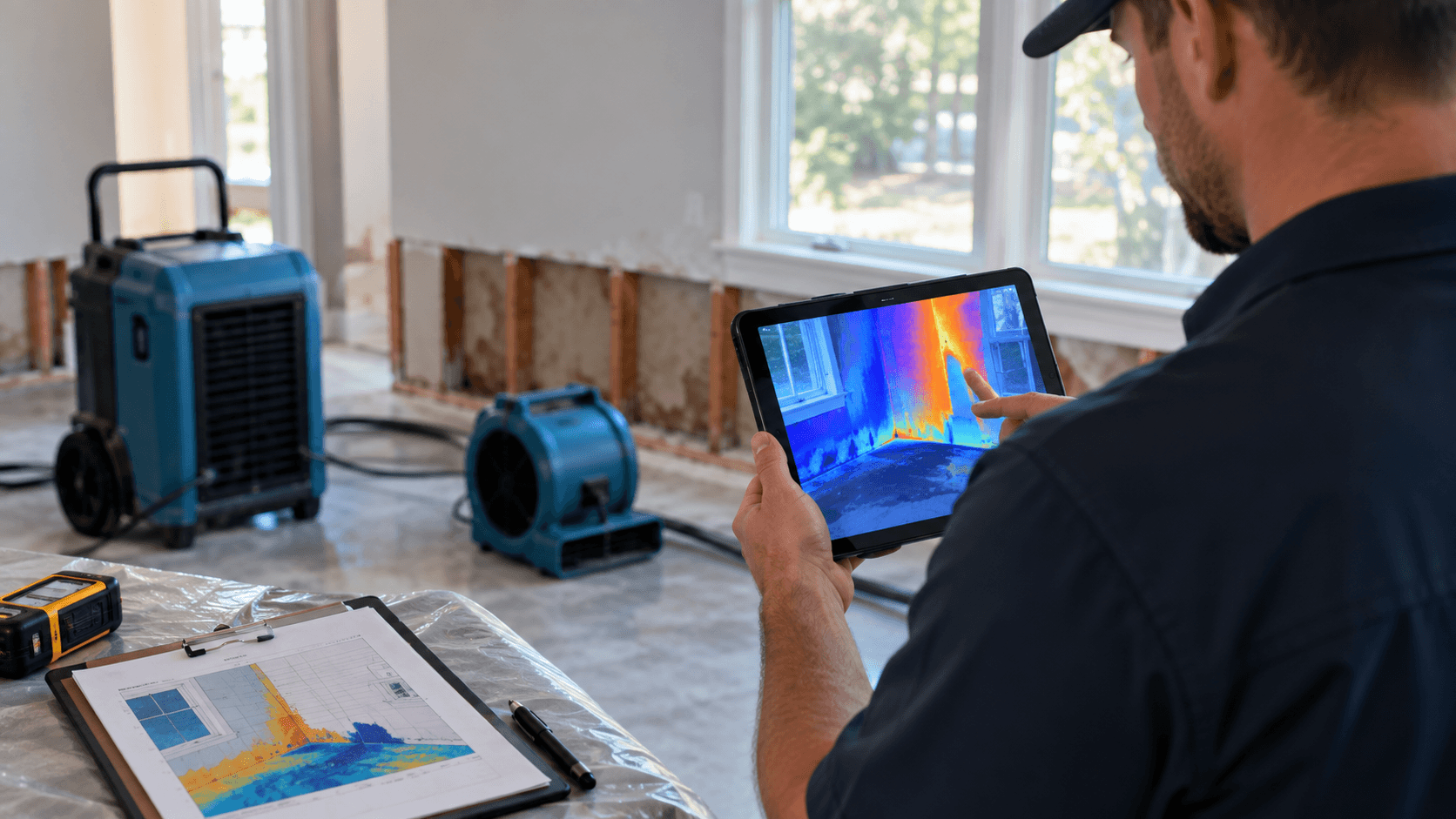
Why Documentation Matters During a Water Loss
Adjusters only pay for what you can prove. Here are the thermal images, moisture maps, and drying logs we build during a water loss so your claim gets paid.
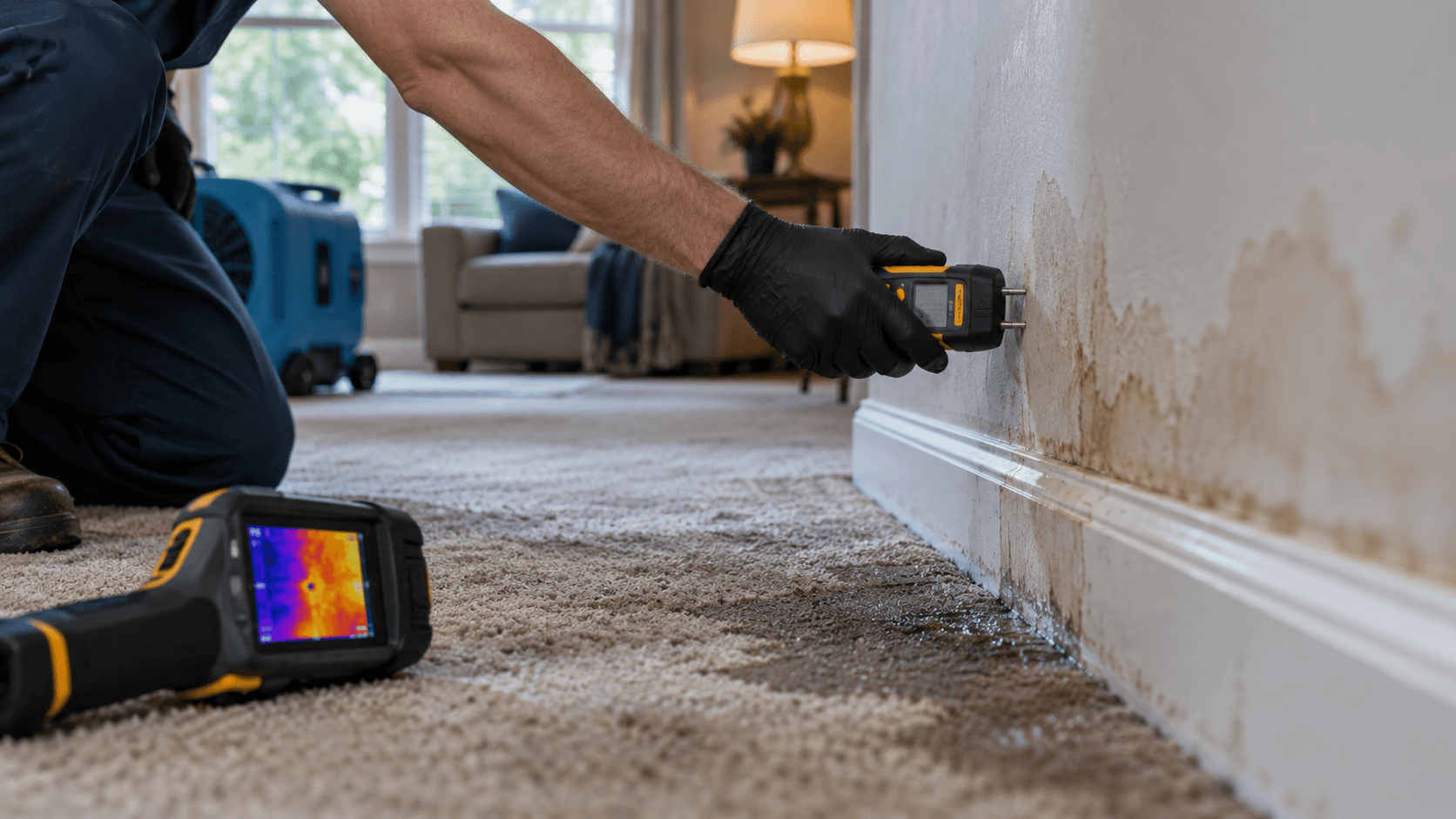
Understanding Water Damage: Categories and Classes
Not all water damage is the same. Here is how the IICRC categories and classes we use on every water loss decide the drying plan, the equipment, and the risk.
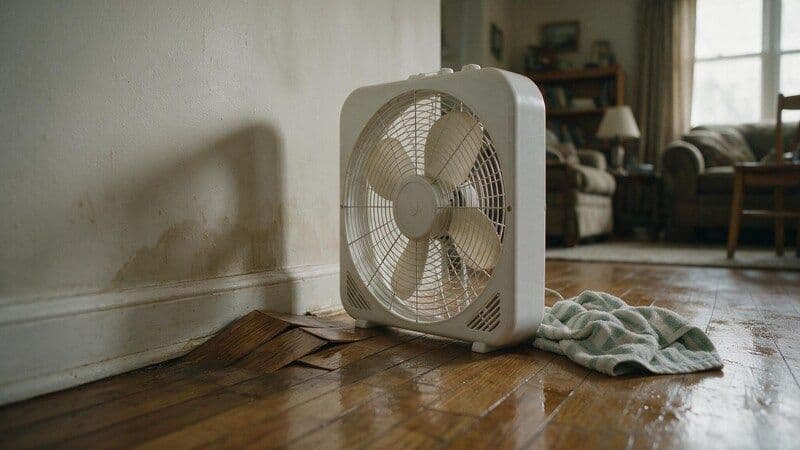
Why DIY Water Damage Restoration Costs You More in the Long Run
Water damage is the one project where doing it yourself usually costs more. Here is what a mop and a box fan miss, and why the bill three weeks later is bigger than the one you avoided.
Serving 44+ Cities Across Greater Atlanta
Select your city to see local restoration services near you
Select your city to see local restoration services near you