The Anatomy of Water Damage: How It Spreads Through Your Home

Water Damage Is an Iceberg
What you see on the surface after a water event, the wet floor, the puddle, the dripping ceiling, represents only a fraction of the total damage. Water follows gravity, capillary action, and the path of least resistance, migrating through your home's structure in ways that are invisible until the damage is advanced.
Understanding how water moves through a building explains why professional restoration uses moisture mapping, thermal imaging, and penetrating moisture meters rather than relying on what is visible to the naked eye.
Gravity: Water Flows Downward
The most obvious path water takes is downward. A burst pipe on the second floor sends water through the floor structure, through the ceiling below, and onto the first floor. From there it continues downward into the basement or crawl space if the volume is sufficient.
Along the way, water saturates everything in its path: subfloor materials, ceiling drywall, insulation, and any personal belongings in its way. A second-floor pipe failure can damage three levels of the home.
Capillary Action: Water Climbs Upward
This is the mechanism most homeowners do not expect. Capillary action draws water upward through porous materials against gravity. Drywall is one of the most efficient capillary materials in a home. Water that contacts the bottom edge of a wall travels upward through the drywall, typically reaching 12 to 18 inches above the visible waterline.
This means that even shallow standing water that only covers the floor by an inch can damage drywall nearly two feet up the wall. The affected area looks dry on the surface while the interior of the drywall is saturated and growing mold.
Lateral Migration: Water Spreads Sideways
Water travels laterally along surfaces and through materials, spreading far beyond the initial contact point. Inside wall cavities, water runs along the bottom plate and wicks into every stud bay, potentially affecting an entire wall from a single entry point. Under flooring, water spreads across the subfloor, finding low spots and accumulating in areas far from the original leak.
Ceiling-mounted leaks are particularly deceptive. Water entering the ceiling from above travels along joist bays, spreading across the entire ceiling plane before it finds a weak point to drip through. The drip spot you see may be 10 or 15 feet from the actual leak source.
The Vapor Phase: Moisture in the Air
Standing water and wet materials release moisture into the air through evaporation. This elevated humidity affects materials throughout the home, not just those in direct contact with water. In a closed home with poor ventilation, humidity levels can climb high enough to cause condensation on cool surfaces, mold growth on distant walls, and warping of materials in rooms that never had direct water contact.
This is why professional restoration addresses humidity control for the entire structure, not just the visible wet areas.
The Timeline of Damage Progression
In the first hour, water saturates carpet, padding, and lower drywall. In the first 24 hours, drywall swelling begins, wood starts absorbing moisture, and bacteria multiply. By 48 hours, mold colonization begins on wet surfaces. By one week, structural materials are weakening, mold is spreading, and materials that were salvageable on day one require replacement.
Every stage of this progression increases the scope and cost of restoration.
Why Professional Assessment Is Essential
The only way to understand the full extent of water damage is professional moisture mapping using penetrating meters and thermal imaging. Surface appearances are misleading. A floor that feels dry may have a saturated subfloor. A wall that looks fine may contain soaked insulation. A ceiling with a single water stain may have widespread hidden damage across the entire joist bay.
Champion Cleaning Systems provides comprehensive water damage assessment and restoration across Sharpsburg, Stockbridge, Buford, Newnan, and metro Atlanta.
Call Champion 24/7 at (404) 282-6821.
You Might Also Like
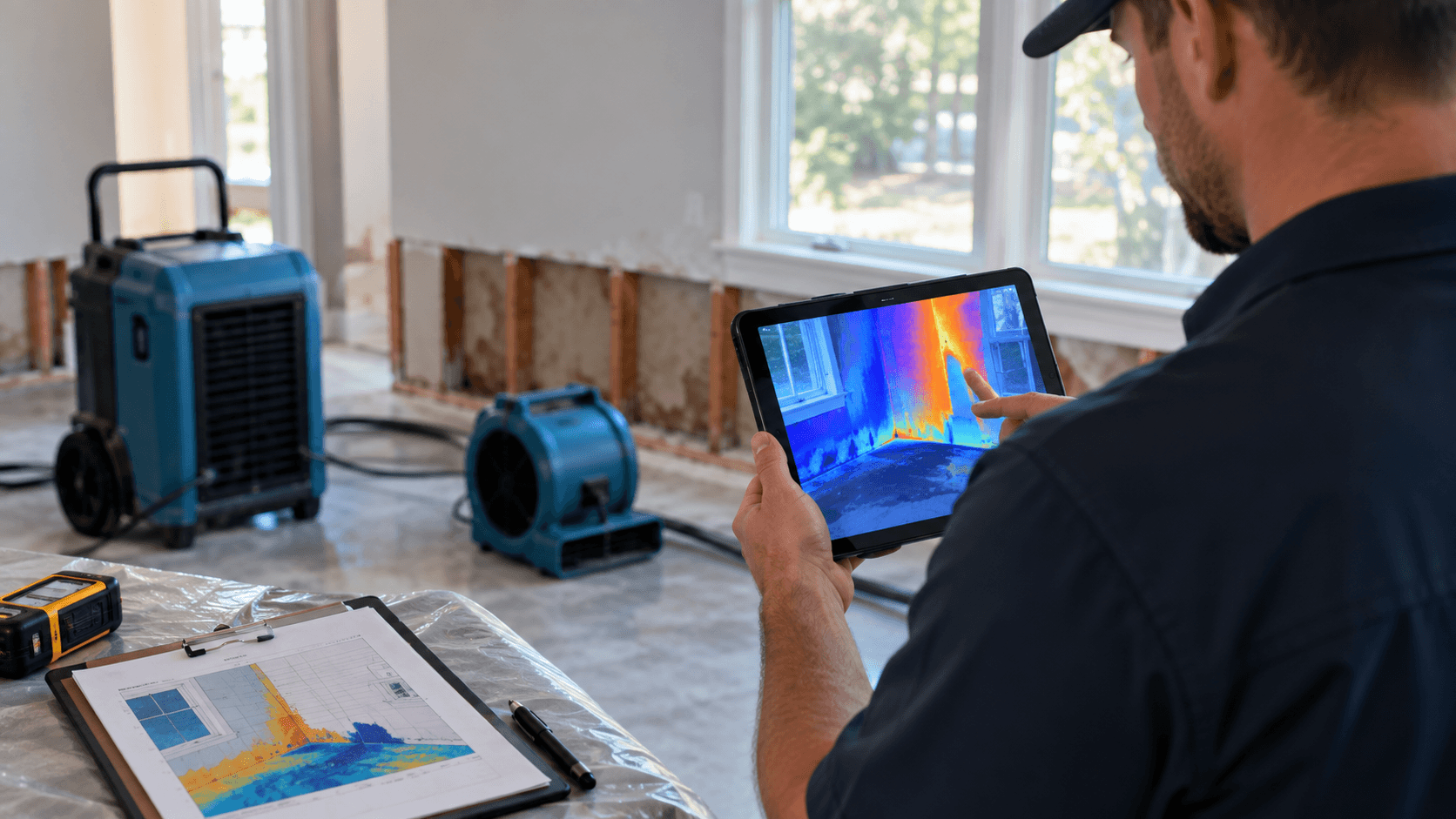
Why Documentation Matters During a Water Loss
Adjusters only pay for what you can prove. Here are the thermal images, moisture maps, and drying logs we build during a water loss so your claim gets paid.
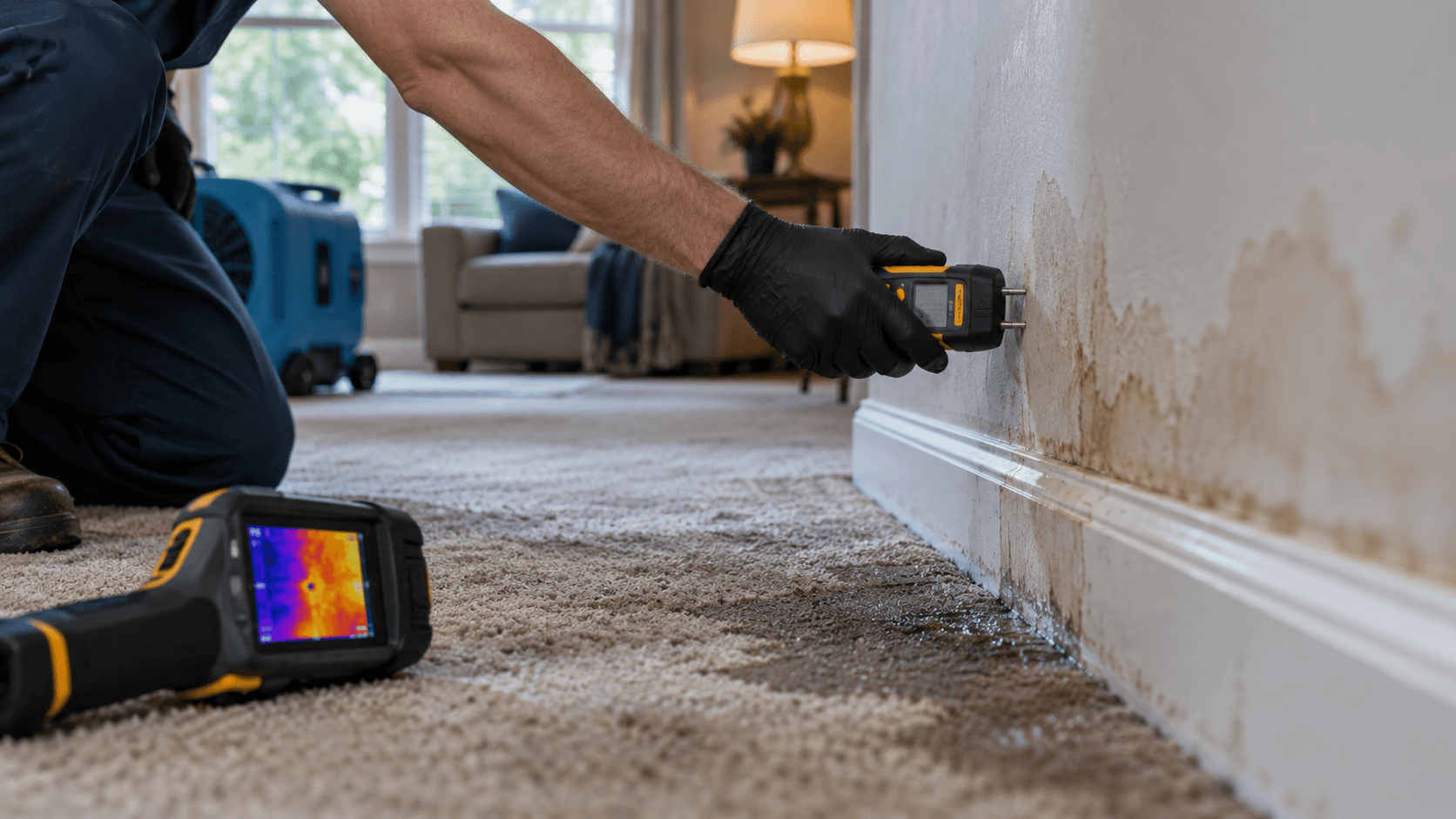
Understanding Water Damage: Categories and Classes
Not all water damage is the same. Here is how the IICRC categories and classes we use on every water loss decide the drying plan, the equipment, and the risk.
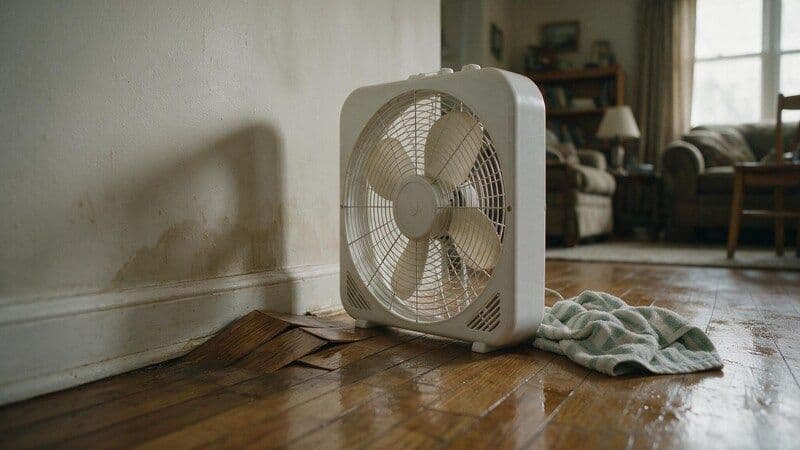
Why DIY Water Damage Restoration Costs You More in the Long Run
Water damage is the one project where doing it yourself usually costs more. Here is what a mop and a box fan miss, and why the bill three weeks later is bigger than the one you avoided.
Serving 44+ Cities Across Greater Atlanta
Select your city to see local restoration services near you
Select your city to see local restoration services near you