Why Proper Drying Makes All the Difference

You have a water leak, you mop up the puddles, throw down a few towels, and set up a box fan to dry out the area. You are good to go, right?
If you have ever dealt with a burst pipe, an overflow, or a leaking supply line, that immediate reaction to soak up the surface water is completely natural. Once the floor feels relatively dry to the touch, it is easy to assume the problem is solved. Not quite! In the water restoration world, we see this exact situation turn into a costly nightmare all the time.
Whether you are facing a massive flood or a minor leak, removing standing water is only the first step. Structural drying is key! Without industrial equipment, precise moisture monitoring, and specialized techniques, hidden moisture will quietly ruin a building long after the surface looks completely fine.
Here is why proper drying makes all the difference and why cutting corners during this phase leads to major headaches down the road.
1. Insurance Policies Expect You to Prevent "Secondary Damage"
When water intrudes into your home, big or small, your insurance policy places a duty to mitigate on you as the homeowner. This simply means you are responsible for taking immediate, reasonable steps to stop further damage from happening.
If you clean up the surface water yourself but skip proper structural drying, moisture stays trapped inside wall cavities, cabinetry, and subflooring. When mold develops or wood framing begins to rot, an insurance adjuster will inspect the damage. If they determine that this secondary damage occurred because the property was not properly dried right away, the insurance company can deny coverage for those secondary repairs.
Professional mitigation provides daily moisture logs, photo, and line item documentation that prove to your adjuster that you took the necessary, professional steps to protect the property from the start. It is important that you check the language in your insurance policy and be informed on your obligations as the homeowner.
2. Water Goes Where You Cannot See It
Building materials act like giant sponges. Drywall, wood framing, subflooring, trim, and insulation are all porous materials that absorb water rapidly. This means water naturally travels upward and outward, far beyond where the original spill happened. (capillary action)
While your floor might feel dry after a quick cleanup, water has certainly traveled:
- Behind baseboards and inside wall cavities
- Underneath hardwood floors, laminate, or vinyl planking
- Deep into carpet padding
- Into ceiling joists
If air movers and industrial grade dehumidifiers are not used to draw that moisture out from the inside of materials, it stays trapped.
3. Mold Only Needs 24 to 48 Hours
When structural materials stay damp for more than 24 to 48 hours, mold begins to colonize. Once mold takes hold inside wall cavities or beneath floors:
- Remediation costs jump significantly compared to simple drying.
- Indoor air quality degrades
- You may end up needing extensive demolition to tear out materials that could have easily been saved if they were dried quickly.
Thorough, rapid drying stops mold growth before it starts, keeping your home safe and your insurance claim straightforward.
4. Uncontrolled Moisture Causes Permanent Structural Damage
Water does not just sit in materials, it fundamentally changes their structure over time.
- Hardwood Flooring: Wet wood swells, leading to cupping where edges rise or crowning where centers rise. Proper psychrometric drying can often restore hardwood back to its original flat shape IF caught early, saving thousands in replacement costs.
- Drywall: Wet drywall loses its structural integrity. It sags, bubbles, crumbles, and can eventually collapse under its own weight.
- Framing: Extended exposure to moisture causes studs and floor joists to warp, twist, and weaken, threatening the structural integrity of the home.
Proper drying is not just about drying out a mess, it is about stabilizing the structural components of your house before irreversible damage occurs.
5. You Cannot Measure Moisture with Your Hands
One of the biggest differences between DIY drying and professional mitigation is how dryness is verified. You simply cannot tell if a wall or floor is dry by looking at it or touching it.
Professional water damage technicians rely on psychrometrics, which is the science of air, temperature, relative humidity, and moisture content in building materials.
To ensure a structure is fully dry, technicians use specialized tools:
- Moisture Meters: To scan surfaces and detect hidden moisture without damaging finishes.
- Penetrating Probe Meters: To check deep inside wood framing, subfloors, or insulation.
- Thermal Imaging Cameras: To map out moisture pathways behind walls without cutting holes unnecessarily.
- Thermo-Hygrometers: To measure relative humidity and grains per pound of moisture in the indoor air.
A drying job is not done when things feel dry. It is done when thermal readings and moisture meters confirm that all affected materials have returned to their pre-loss dry standard, giving you exact proof for your insurance company.
The Bottom Line
Whether you are dealing with a flooded basement or a slow leak, speed and thoroughness are what save a home. Household fans and shop vacs might remove what you can see, but proper structural drying handles what you cannot.
If your home has experienced water damage, no matter how big or small, do not just clean it up. Make sure it is completely dried. Call Champion! We are your certified, professional neighbors! Here 24/7, 365!!
You Might Also Like
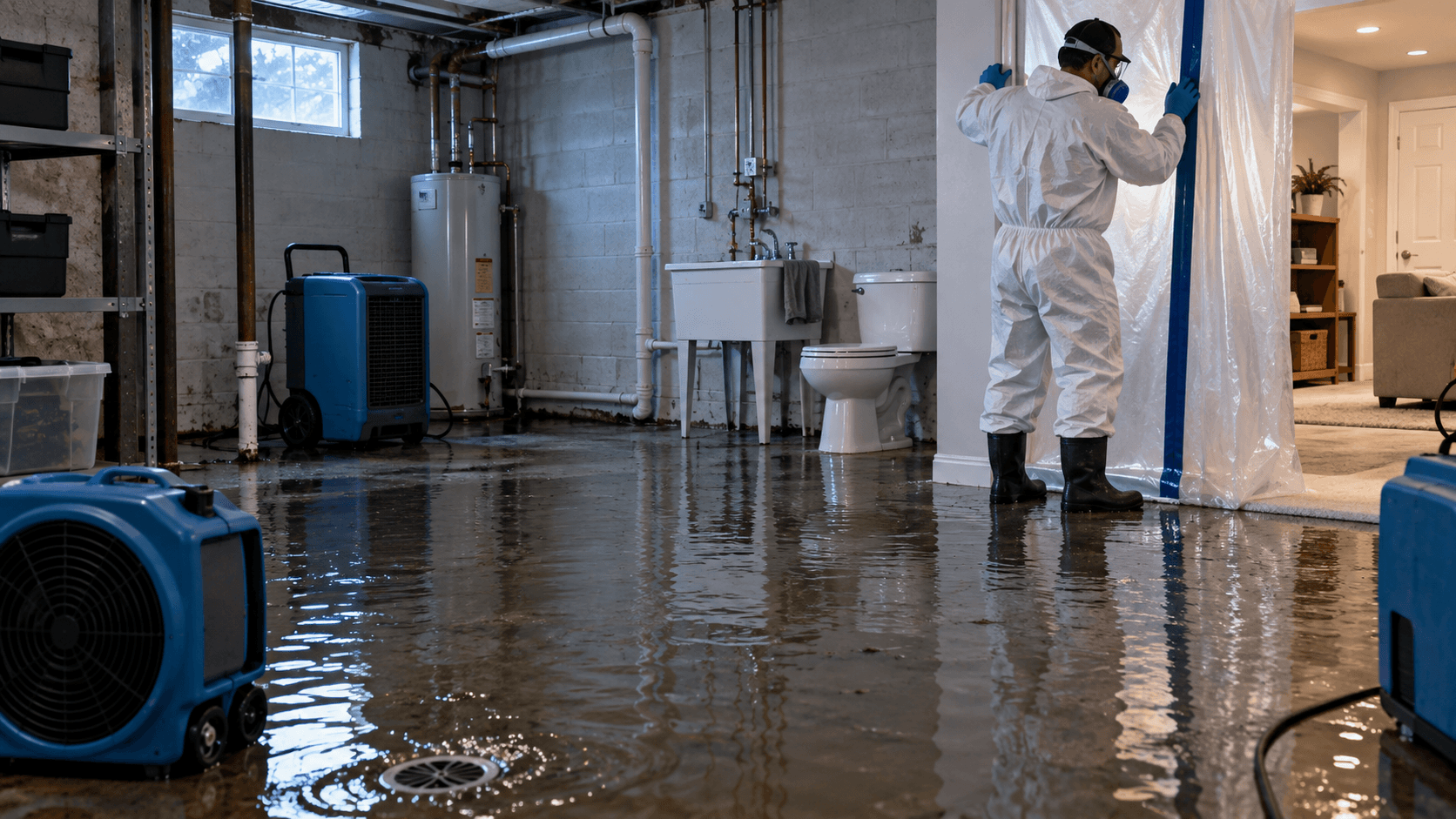
Raw Sewage in Your Home?
Sewage backup in your home? Here is how to secure the area, what never to do with Category 3 water, and what professional cleanup and insurance involve.
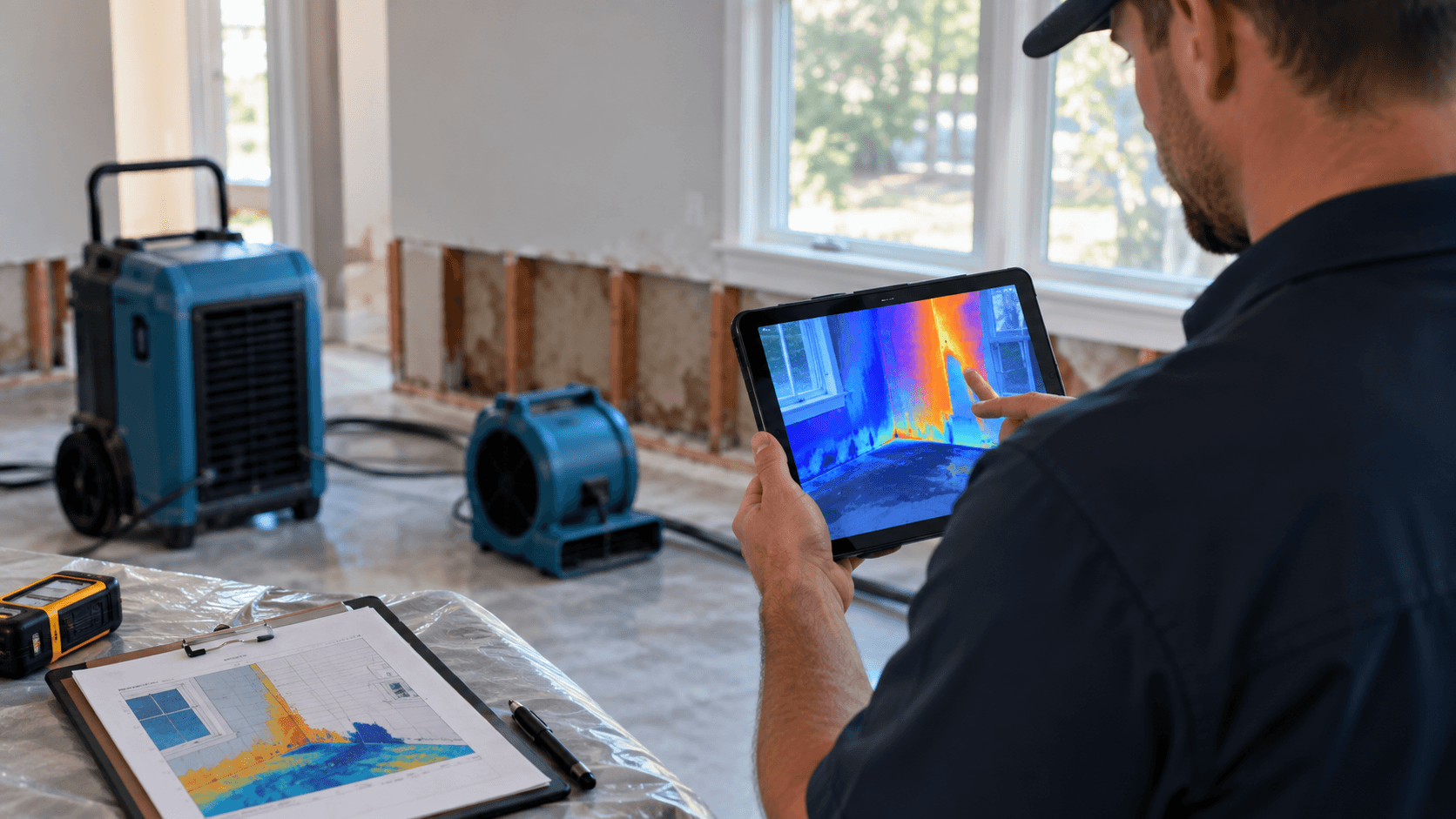
Why Documentation Matters During a Water Loss
Adjusters only pay for what you can prove. Here are the thermal images, moisture maps, and drying logs we build during a water loss so your claim gets paid.
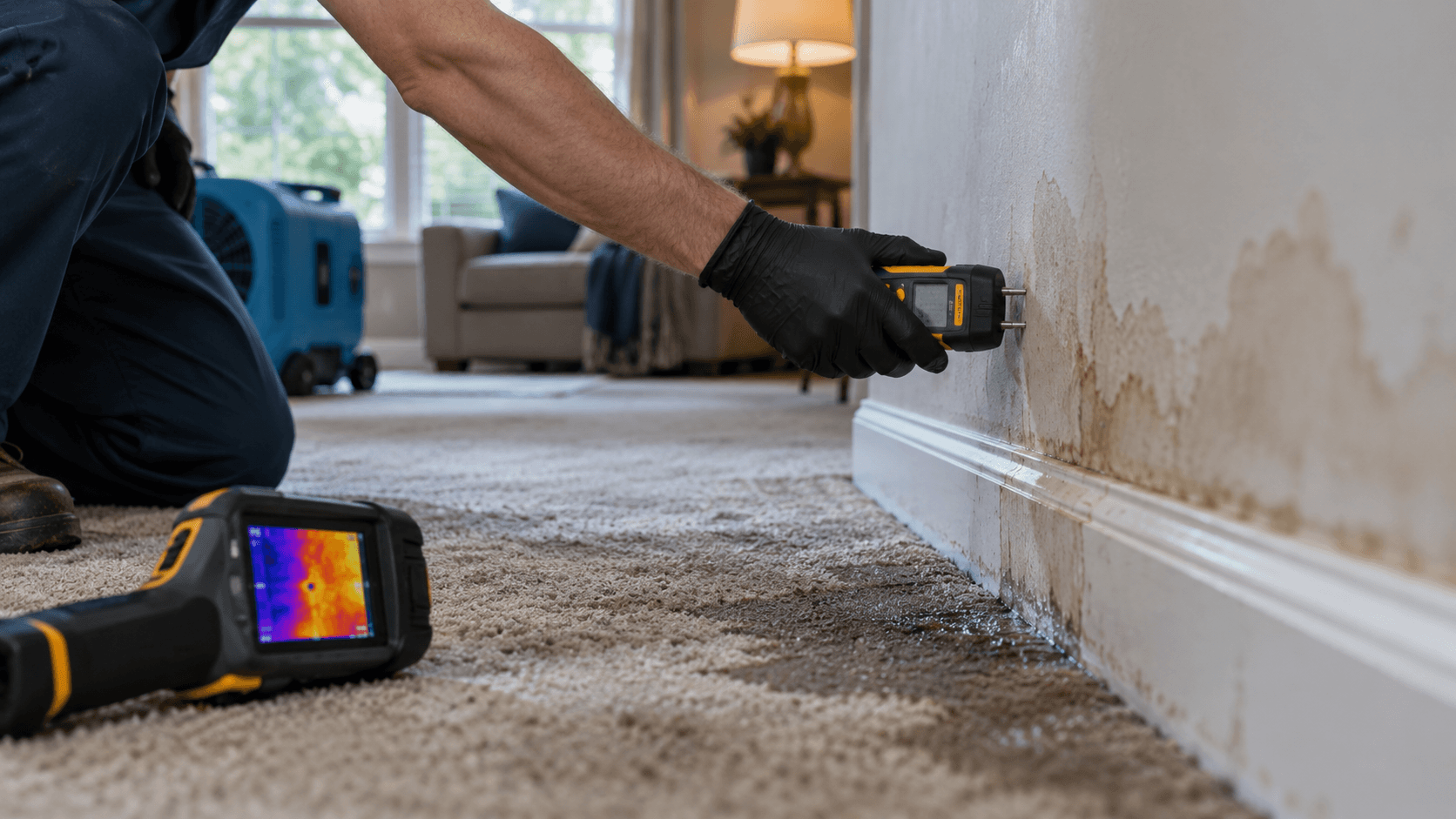
Understanding Water Damage: Categories and Classes
Not all water damage is the same. Here is how the IICRC categories and classes we use on every water loss decide the drying plan, the equipment, and the risk.
Serving 44+ Cities Across Greater Atlanta
Select your city to see local restoration services near you
Select your city to see local restoration services near you